
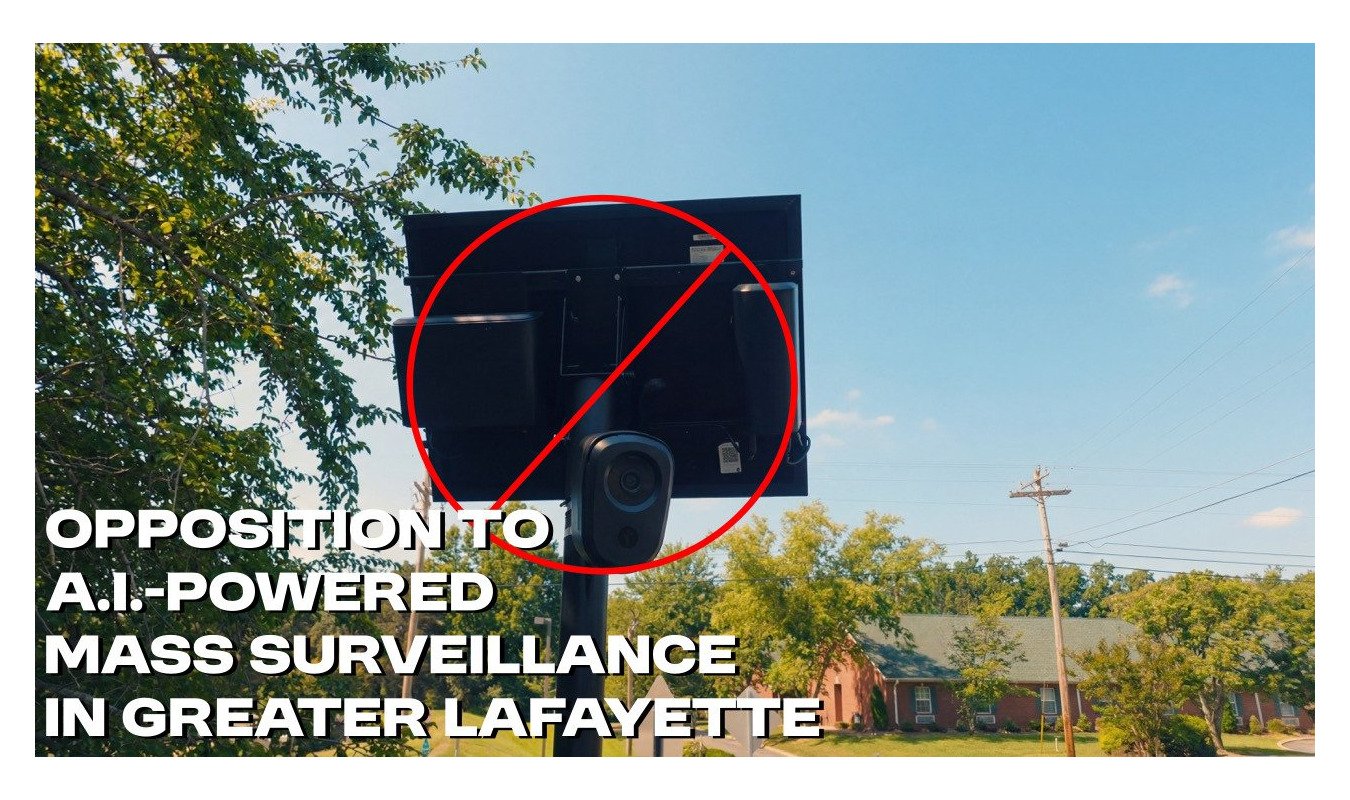
[Below is a community petition in opposition to A.I.-powered mass surveillance systems and devices in Greater Lafayette. Not sure where the cameras are today? View a map of Greater Lafayette]
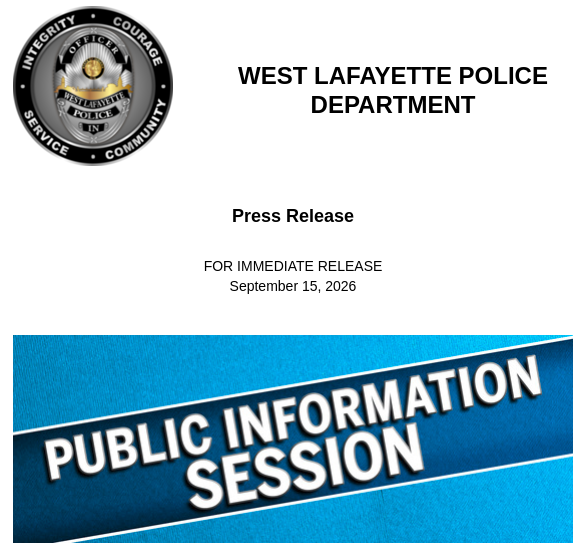
Upcoming Public Information Session
WLPD Invites Public to Learn How Automated License Plate Reader Technology Is Used in West Lafayette
Tuesday, Sept. 22
6-8 p.m.
Margerum City Hall, 222 N. Chauncey Ave.
Next Steps
- Post the link to this petition on social media: bestlafayette.com/deflock
- Share the petition with neighborhood organizations, clubs, and civic groups. Let them know that A.I.-enabled mass surveillance is already harming our community, but that our local government officials have the power to end these surveillance contracts.
- Email our local mayors with your concerns about A.I.-enabled mass surveillance
Lafayette Mayor Tony Roswarski: web-mayor@lafayette.in.gov
West Lafayette Mayor Erin Easter: mayor@westlafayette.in.gov
End A.I.-Powered Mass Surveillance in Greater Lafayette
Petition Language
End A.I.-Powered Mass Surveillance in Greater Lafayette
Deflock Tippecanoe County
The Issue
Automated license plate readers (ALPRs) are dragnet A.I. surveillance tools that fuel abusive policing practices, giving local police and federal authorities the ability to track people and repress dissent. This technology, while marketed as a tool for safety, has the potential to infringe upon our civil liberties, compromise individuals’ right to privacy, and target vulnerable communities unjustly.
Flock Safety cameras, in particular, have raised serious concerns. These invasive devices capture and store large volumes of data, tracking the movement of vehicles within our neighborhoods. The accumulation of this data can be used for indefinite tracking, creating a climate of fear and oppression instead of one of safety and protection. Mass surveillance relies heavily on A.I. data centers and imposes enormous environmental and financial costs on communities.
The City of Lafayette has committed $250,000 to Flock mass surveillance. West Lafayette and Purdue are also using Flock surveillance cameras. Rather than sending all that money to Big-Tech billionaires, we should keep that money in our community and fund local initiatives to reduce crime.
Evidence suggests that ALPRs do not significantly deter crime. The Electronic Frontier Foundation has highlighted numerous instances where the use of these cameras has not only invaded privacy but also failed to produce the intended results. According to studies, reallocating funds to community-focused initiatives benefits the public and reduces crime rates more effectively than surveillance tools.
We call upon community leaders and policymakers to end the use of A.I.-powered mass surveillance tools in our community. Sign this petition to demand the halt of this dystopian surveillance technology and advocate for investments in resources that genuinely serve our community’s needs.
Presentations
We also have volunteers who can give a Flock presentation to local groups upon request.
News
Hackers Stole Flock’s Camera Software, Revealing How the Company Tracks Cars and People
- Wired’s coverage: https://archive.is/Xy8dz
- 404 Media’s coverage: https://archive.is/0IWco
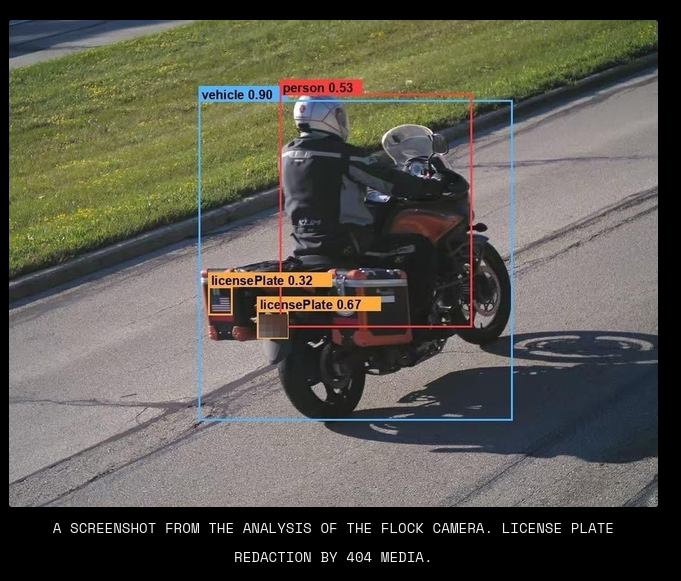
Flock’s cameras photograph passing vehicles and send the images and other data to the company’s servers. There, Flock’s system presumably reads the license plate and can identify characteristics such as the vehicle’s color, make, and model. Flock then makes these timestamped records searchable by whichever local agency owns or has access to the cameras. But in many cases, Flock’s system also allows other police departments from all over the country to search those cameras too, as part of the company’s national network. In Alpharetta, Georgia, for example, WIRED found that records from the city’s Flock cameras were accessible to more than 2,000 agencies, including police departments, colleges, airports, and even inexplicably the Office of Inspector General for the federal General Services Administration.